Dealing with live contraband
Wednesday, 22 May 2024
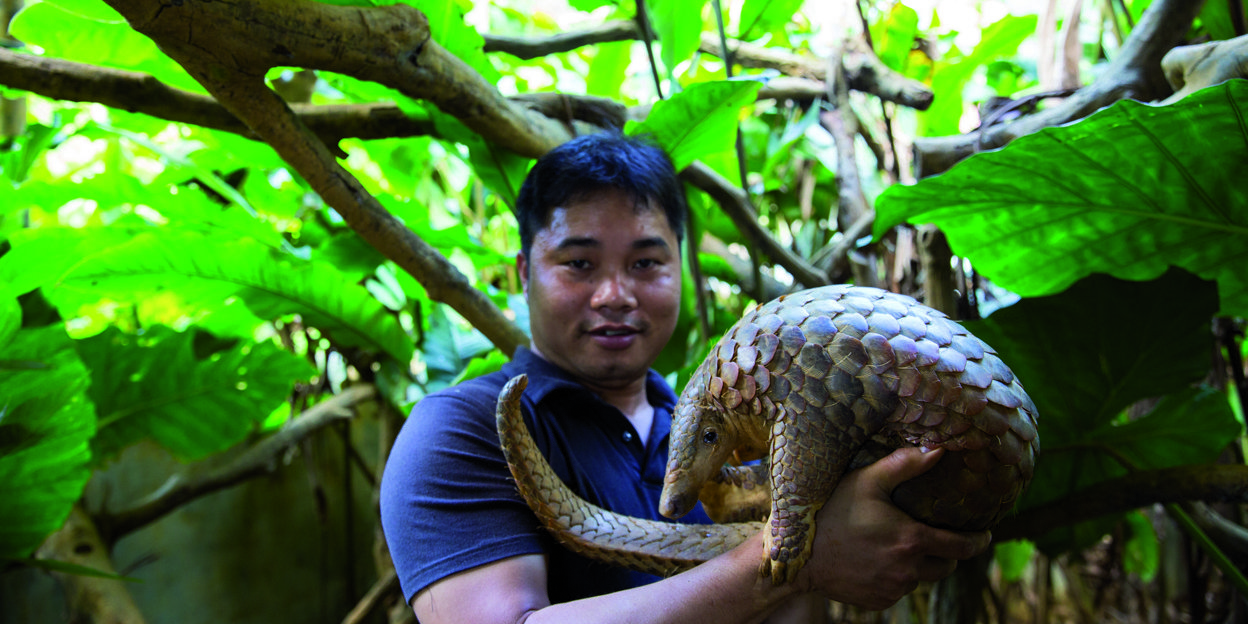
Illegal animal trafficking is a billion-dollar business. It drives some species to the brink of extinction and causes great misery for individual animals. The fight against illegal animal trade is important. Every seizure of live animals leads to horror in society about poaching and smuggling practices, and sometimes relief: “Thank goodness, things turned out well for these animals!” However, that ‘happily ever after’ fairytale ending is still quite complex in reality!
Zoos can play an important role as shelters for confiscated animals, as they have the necessary facilities and expertise to house and care for a wide variety of animal species. The government also needs somewhere to take the confiscated geckos, frogs, corals, or parrots.
The Ocean as a shelter
All corals and other marine invertebrates seized in the Netherlands, such as giant clams, are brought to Burgers' Ocean. The species is determined, they are registered in the animal registration system, and they are given the best possible care. If, after several months, a court rules that the seizure was justified, Burgers' Zoo is allowed to transfer the marine animals to other public aquaria. We do not usually want to keep the corals ourselves, as our corals are thriving and reproducing just fine, and the coral tank is already fairly full. We also have little need for dozens of shells. We are certainly not eagerly awaiting new seizures to obtain new animals!
1800 newcomers
Taking care of confiscated animals is complicated by the unpredictability of which animal needs help at what time. This applies both to the shelters for smuggled animals worldwide and to locally operating shelters. A few weeks ago, the conservation project Save Vietnam's Wildlife, supported by Burgers' Zoo Conservation, notified us of a particularly large seizure: their two Vietnamese shelters received as many as 1,800 animals at once. This primarily concerns reptiles, such as snakes, monitor lizards and turtles, but also some birds. You can probably imagine the logistical challenges involved! The animals had to be moved from boxes, transport crates and cages into decent enclosures. You need to quickly figure out each species’ needs in terms of housing and nutrition. You also need sufficient staff for the daily care of so many extra animals, not to mention the training required for the zookeepers, who suddenly find themselves caring not for birds or pangolins but venomous snakes, for example! Pangolins are, incidentally, the most smuggled animals worldwide. They regularly end up at Save Vietnam's Wildlife through seizures, though this 'only' involves a handful of animals per week, on average.
Fortunately, animals confiscated in their country of origin can often be released back into the wild, depending on their physical and mental condition and whether the habitat is still suitable and safe for them. If that is not possible, a seizure also means a duty of proper care for these wild animals in the shelter. That duty of care can often last for many years; for some animals, such as parrots or capuchin monkeys, it can even last for several decades.
Also interesting

Adventurous firefly sparks spectacular light show at Burgers’ Zoo
Seven years since the last edition, Burgers’ Zoo is organising a reimagined version of its enchantin…
22 September 2026

Burgers' Zoo developing world's largest seagrass aquarium
Royal Burgers’ Zoo is developing the world’s largest seagrass aquarium, with a volume of over 50,000…
6 August 2026

Burgers' Zoo opens Desert after extensive remodelling
After months of work to renovate a large section of the Desert, Royal Burgers’ Zoo reopens the Ameri…
9 July 2026